

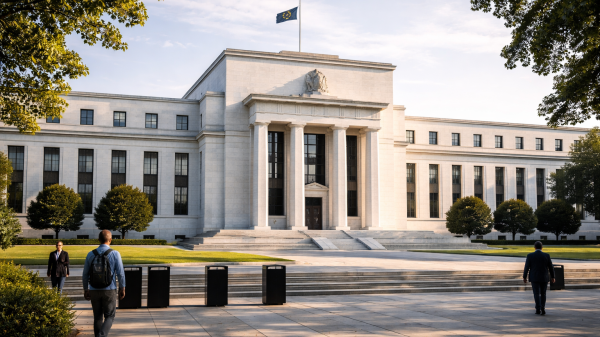

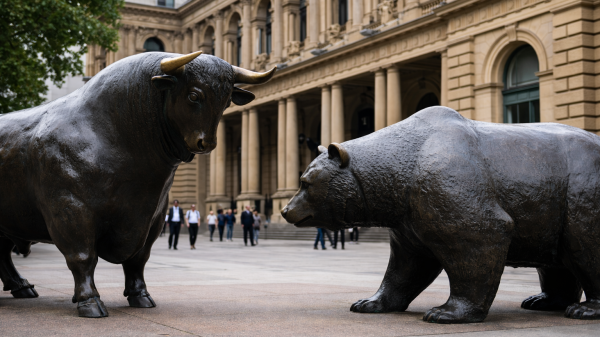








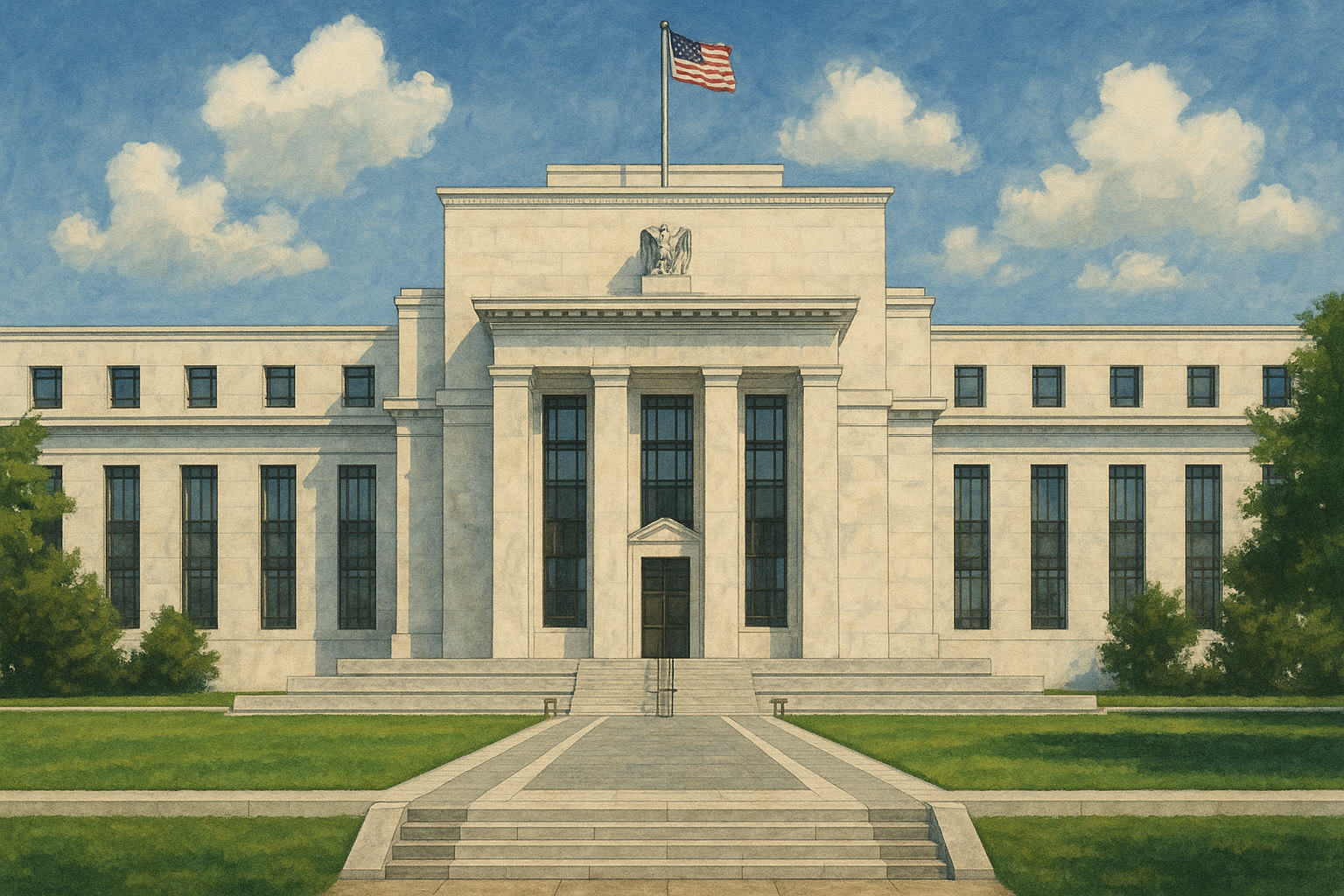
The Federal Reserve’s final policy meeting of the year arrives at a moment when the stock market is once again within striking distance of record highs.
After stumbling in early November on fears that the artificial-intelligence trade had entered bubble territory, equities have rebounded sharply — and much of that recovery can be traced to expectations that the Fed will cut interest rates this week.
As central bank officials weigh a divided economic landscape, investors are watching closely for signals that could determine market direction heading into 2026.
Rate-cut expectations drive the market rebound
After a turbulent November marked by concerns over frothy AI valuations, markets have rallied as traders increasingly bet on an imminent rate cut.
Polymarket sees a 97% chance of 25 basis point rate cut.
The logic behind the market’s enthusiasm is straightforward.
Lower interest rates reduce borrowing costs for consumers and businesses, encourage spending and investment, and ultimately support corporate profits.
Rate cuts also reduce yields on government bonds and cash-like instruments, making equities comparatively more attractive.
Smaller, rate-sensitive companies have felt the effects acutely.
The Russell 2000 index hit a record high earlier in December, a reflection of how lower interest expenses can quickly widen margins for firms in real estate, manufacturing, and other capital-intensive sectors.
As José Torres of Interactive Brokers noted, reduced borrowing costs can meaningfully lift profitability for companies operating with tighter balance-sheet constraints.
Markets, however, are forward-looking — and while investors appear confident about a December cut, the trajectory beyond that is less certain.
Current odds imply only a 23% chance of another cut in January and a 37% chance of a second cut by March.
A ‘hawkish cut’ could test investor optimism
While markets are betting heavily on a rate cut, the more consequential question is how the Fed will frame the path ahead.
The committee remains divided: some members argue cuts are needed to counter a softening labor market, while others warn that easing too aggressively risks reigniting inflation.
That tension has given rise to the term “hawkish cut,” the scenario many expect this week — a quarter-point reduction paired with messaging that additional cuts are far from guaranteed.
Bill English, former director of monetary affairs at the Fed, expects policymakers to stress that the committee is “comfortable where they are” and sees no immediate need for further cuts unless economic conditions shift. Goldman Sachs similarly anticipates a statement signaling that “the bar for any further cuts will be somewhat higher.”
Several factors complicate the debate.
Inflation remains above the Fed’s 2% target, hovering around 2.8% on the central bank’s preferred measure.
Hiring has shown signs of softening, with layoffs inching higher.
And the impact of President Donald Trump’s tariffs continues to feed into pricing pressures.
As former Cleveland Fed President Loretta Mester noted, inflation has not yet returned to target, and policy may still need to remain restrictive.
How markets may react to the Fed’s next moves
The Fed’s decision — and more importantly, its guidance — could shape market sentiment for weeks.
Since late October, stock performance has been closely tethered to monetary policy signals. Dovish comments have pushed the S&P 500 higher, while hawkish tones have triggered sell-offs.
Investors will scrutinize the Fed’s updated “dot plot,” economic projections, and any remarks from Chair Jerome Powell regarding future cuts, labor-market risks, and inflation trends.
Some market participants are also watching for clues on the Fed’s balance-sheet strategy, with speculation that policymakers may shift from quantitative tightening back toward modest bond purchases.
With the AI trade still influential but increasingly sensitive to funding costs, mega-cap tech stocks are particularly exposed to shifts in rate expectations.
The broader market, too, appears poised for another inflection point.
For now, investors may settle for what one strategist called “a few dovish breadcrumbs.”
Whether the Fed offers them — or chooses instead to strike a firmer tone — will determine whether stocks can sustain their year-end rally or retreat once more from record levels.
The post How the Fed’s rate cut decisions could shape the market’s next move appeared first on Invezz