














Applications for unemployment benefits in the United States rose sharply last week, marking the largest increase since the early days of the pandemic.
Initial claims rose by 44,000 to 236,000 for the week ending Dec. 6, according to Labor Department data released Thursday.
The surge followed an unusually low reading during the Thanksgiving week and exceeded all but one estimate in a Bloomberg economist survey.
The four-week moving average, a less volatile measure, inched up to 216,750, reflecting a modest increase in underlying claims activity.
While the week-to-week jump looks dramatic, many economists cautioned that distortions tied to Thanksgiving likely exaggerated the latest swings.
Initial claims have largely hovered between 210,000 and 250,000 this year, signaling that layoffs have not meaningfully accelerated.
Continuing claims fall, offering a counterweight
Continuing claims, a measure of the number of Americans receiving unemployment benefits, fell to 1.84 million in the week ending November 29, down from 1.94 million a week earlier.
The four-week moving average also declined by 27,000 to 1.92 million.
The insured unemployment rate dipped to 1.2 percent.
These indicators suggested that while some workers are losing jobs, others continue to find employment—albeit more slowly.
Still, many economists warn the job market is cooling unevenly.
Job creation has slowed compared with recent years, reflecting weaker demand for workers and the effects of tighter immigration policy, reducing labor supply.
Workers who do lose jobs now face longer job searches amid sluggish hiring.
Fed cuts rates but signals a pause
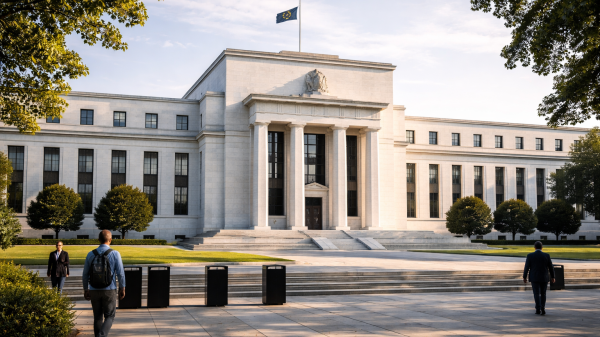
Concerns about labor-market cooling contributed to the Federal Reserve’s decision on Wednesday to reduce interest rates for the third consecutive meeting, cutting by a quarter percentage point.
Fed Chair Jerome Powell said the labor market “seems to have significant downside risks,” citing evidence that official payroll figures may be overstating job creation.
In September, the Bureau of Labor Statistics revised down its estimate of employment growth by 911,000 jobs for the 12 months through March—equivalent to 76,000 fewer jobs per month than initially reported.
Additional benchmark revisions are expected in February.
Despite the latest rate cut, the Fed signaled it will likely pause further reductions as it assesses the direction of the labor market and inflation, which policymakers said “remains somewhat elevated.”
Mixed signals cloud the labor-market outlook
The conflicting indicators have left economists split. On the surface, headline jobs data still appear stable.
The US economy added 119,000 jobs in September, and the unemployment rate ticked up only slightly to 4.4 percent.
But the pace of hiring has slowed meaningfully from earlier years.
Artificial intelligence adoption in some industries and the drag from import tariffs have both weighed on hiring demand, economists said.
Meanwhile, reduced immigration has tightened labor supply, further complicating the picture.
November’s employment report—delayed by the 43-day government shutdown—will be released Tuesday and will incorporate data for both October and November.
However, October’s unemployment rate will be missing because the household survey was suspended during the shutdown.
The Fed’s latest projections see unemployment rising to 4.5 percent this year before easing slightly to 4.4 percent in 2026, unchanged from estimates made in September.
As December begins with unusual volatility in jobless claims, policymakers and economists alike are watching closely for signs of whether the labor market is transitioning toward a softer landing—or something more fragile.
The post US jobless claims spike amid holiday volatility appeared first on Invezz