








Global equity markets bounced back sharply after US President Donald Trump softened his stance on tariffs and Greenland, in a déjà vu return of the “Trump Always Chickens Out”, or TACO trade.
European markets led the advance, recovering a sizeable portion of losses triggered earlier in the week by fears of a renewed transatlantic trade confrontation.
Wall Street futures also pointed higher, signalling a stronger open in New York.
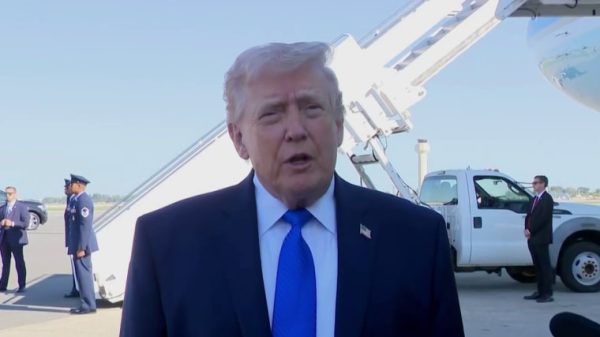
The rebound followed Trump’s speech at the World Economic Forum in Davos, where he ruled out using force to acquire Greenland and announced the suspension of planned tariffs against European allies, easing immediate concerns over a trade war.
European stocks recover lost ground
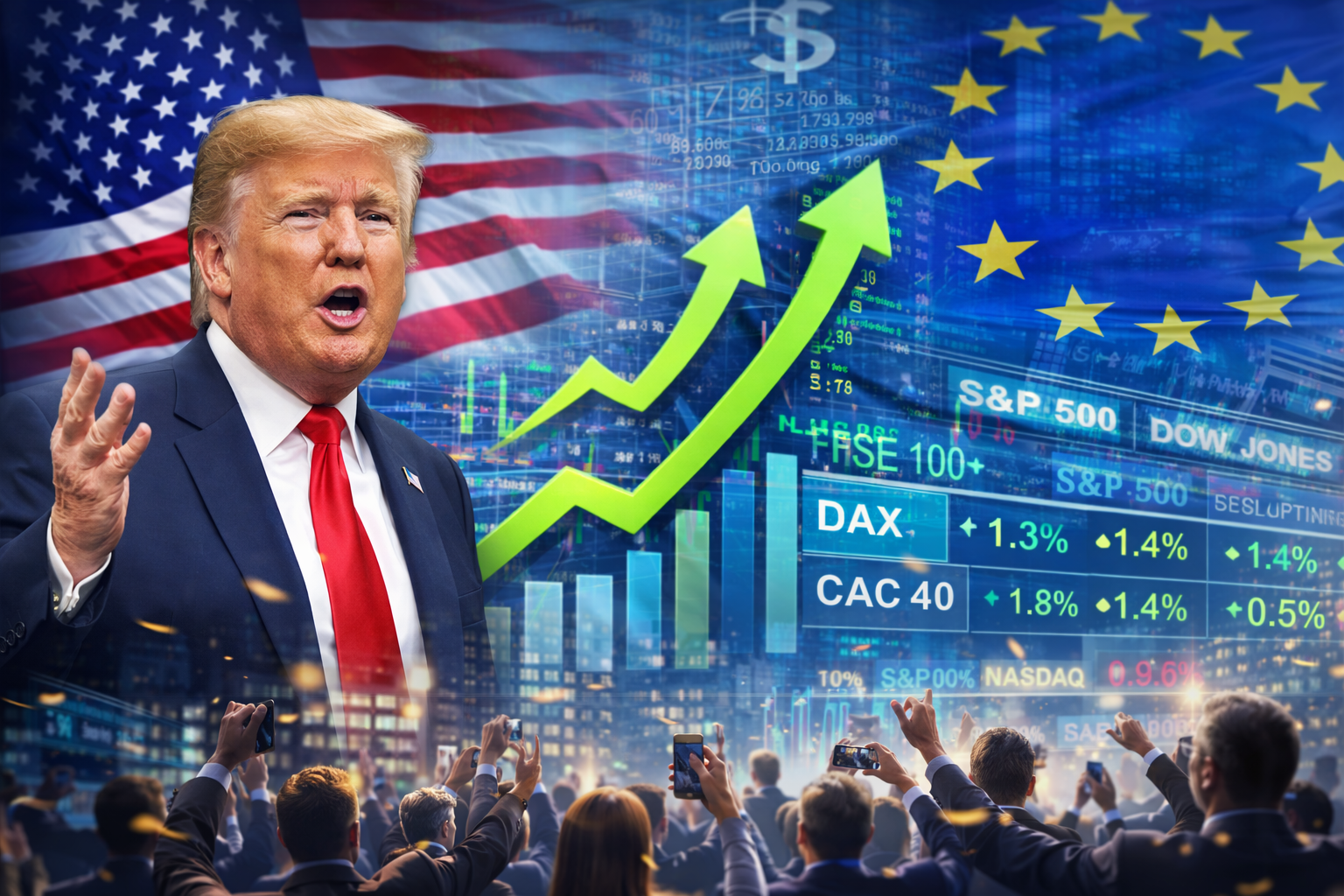
In London, the FTSE 100 climbed 0.8% to 10,225 points, touching a fresh record high.
Germany’s Dax and France’s Cac 40 both rose 1.4%, while the pan-European Stoxx 600 added 1.4% before trimming some of its gains later in the session.
The roughly 1% rise in European equities clawed back about half of the losses seen since Trump’s weekend tariff threats had reignited trade war jitters.
Investors had been unsettled after the US president announced plans to impose a 10% tariff on goods from eight European countries from February 1, rising to 25% in June unless negotiations over Greenland progressed.
Stocks had sold off sharply on Tuesday as geopolitical tensions flared between the US and Europe, prompting a broad risk-off move across asset markets.
Wall Street futures point higher
US equity futures suggested the rally would extend across the Atlantic.
Contracts on the Nasdaq 100 rose 0.8%, led by technology stocks, while S&P 500 futures gained around 0.5%.
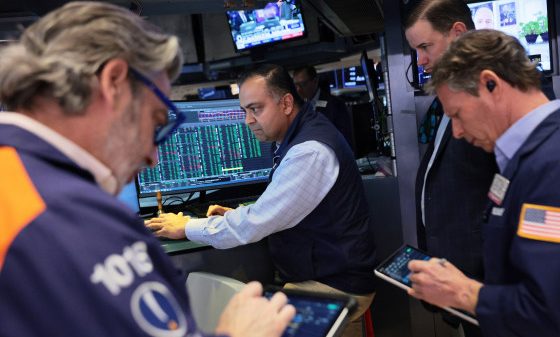
Dow Jones Industrial Average futures were up 0.2%, following Wall Street’s strong rebound on Wednesday, when major indices closed more than 1% higher.
Analysts said the market reaction reflected relief that the most severe policy threats had been dialled back, at least for now.
Richard Hunter, head of markets at Interactive Investor, described the move as “the return of the Taco trade”, a reference to investors betting that Trump’s most aggressive positions will ultimately be softened.
Neil Wilson, strategist at Saxo, said the pivot had left markets buoyant. “From the market point of view, it’s the classic Taco trade. The very real threat of a trade war has receded,” he said.
What is the TACO trade?
The TACO acronym was coined by financial journalist Robert Armstrong to describe a recurring pattern during Trump’s presidency.
It suggests that the president often uses extreme threats as negotiating leverage but tends to retreat when markets react negatively or economic risks intensify.
The strategy was tested during the so-called Liberation Day tariffs in April 2025, when a flurry of abrupt policy announcements triggered a sharp market sell-off that proved short-lived once the measures were softened.
In May last year, when asked about the very trade by a reporter at the White House, Trump had said, “Oh, isn’t that nice – ‘I chicken out.’ I’ve never heard that.”
“But don’t ever say what you said,” he added to the reporter. “That’s a nasty question.”
“The lesson from last year was that markets are able to look through this kind of geopolitical, headline-driven volatility,” said Michael Metcalfe, head of macro strategy at State Street.
He added that interest rate expectations and economic fundamentals were likely to regain prominence.
Trump’s Davos pivot on Greenland and tariffs
In his closely watched address at Davos, Trump reiterated his desire for “immediate negotiations” over the acquisition of Greenland but stressed that he would not use force to secure the territory.
More significantly for markets, he said he and NATO Secretary General Mark Rutte had agreed on what he described as a “framework of a future deal” involving Greenland.
That announcement was accompanied by confirmation that threatened tariffs on European countries, due to take effect next month, would be withdrawn.
The remarks were enough to trigger a renewed rally in US equities, with the S&P 500, Dow Jones Industrial Average and Nasdaq Composite all finishing more than 1% higher.
Lingering caution beneath the rally
Despite the upbeat tone, some analysts warned that caution remains evident beneath the surface.
Russ Mould, investment director at AJ Bell, said markets appeared to be regaining balance rather than accelerating into a full risk-on phase.
“Gold’s rally paused for breath, but there wasn’t a major sell-off,” Mould said.
That suggests investors still want safety in their portfolios. Healthcare and tobacco stocks were also in favour, which is more typical of cautious sessions.
Kyle Rodda, senior financial market analyst at Capital.com, said volatility was likely to persist.
“The chaos is far from over. Trump’s foreign policy remains erratic, and that keeps uncertainty elevated,” he said.
Others warned against complacency.
Matthew Tuttle, chief executive of Tuttle Capital Management, said repeated walk-backs could lull investors into ignoring genuine risks.
“The danger is assuming every threat will be reversed, until one day it isn’t,” he said.
Focus shifts to data, Fed and earnings
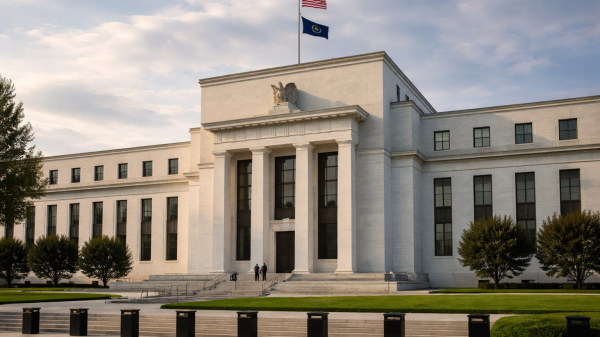
With geopolitical tensions easing for now, investors are turning their attention to a busy slate of US economic data, including the final estimate of third-quarter GDP, weekly jobless claims and the personal consumption expenditures index, the Federal Reserve’s preferred inflation gauge.
The figures come ahead of next week’s Fed meeting, where policymakers are widely expected to leave interest rates unchanged amid sticky inflation and resilient growth.
Markets are also watching closely for signals on who Trump may nominate as the next Fed chair, after renewed criticism of Jerome Powell.
Earnings season is gathering pace, adding another test for sentiment as companies outline how demand, costs and macro uncertainty shaped their year-end results.
The post Global markets rebound as Trump puts TACO trade back on the menu appeared first on Invezz