












Brazil’s current account deficit ended 2025 broadly in line with the previous year, according to Central Bank data released on Monday.
The stabilisation was largely driven by a recovery in Foreign Direct Investment (FDI) coverage, following a period of deterioration earlier in the year.
The continent’s largest economy closed the year with a current account shortfall of 3.02% of GDP, nearly identical to the 3.03% deficit recorded in 2024.
This result marks a significant recovery from the mid-year slump, when the 12-month rolling deficit had widened to approximately 3.7%.
The earlier imbalance was primarily caused by a narrowing trade surplus, as import growth outpaced export performance.
While the trade balance remained positive, it was weighed down by a surge in foreign goods acquisitions, fueled by resilient domestic demand.
Economic cooling is indicated by monetary tightness
Clearer signs of an economic slowdown began to emerge in the final months of the year.
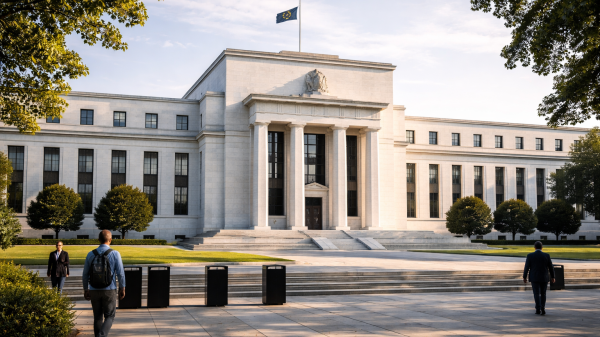
This shift coincided with the Central Bank’s decision to maintain its hawkish monetary policy, holding the benchmark interest rate at 15%—near a 20-year high.
This aggressive stance is aimed at steering inflation back toward the bank’s 3% target.
As borrowing costs continued to climb, domestic demand began to moderate.
This cooling effect eased the pressure on imports, allowing the current account balance to improve toward year-end.
This late-year correction largely offset the earlier widening of the deficit, bringing the annual total back in line with 2024 levels.
Policymakers are scheduled to meet this Tuesday and Wednesday.
Market forecasts widely expect interest rates to remain unchanged for a fifth consecutive meeting.
Foreign direct investment coverage remains strong
Estimates indicate that Foreign Direct Investment (FDI) continued to cover the bulk of the current account deficit in 2025.
Annual FDI inflows reached 3.41% of GDP, closely mirroring the 3.39% recorded in 2024.
Despite monthly volatility, the data suggest that long-term capital inflows remained broadly stable throughout the year.
For the month of December, the country saw a net FDI outflow of $5.2 billion, starkly contradicting economists’ expectations of a $1 billion inflow.
According to the Central Bank, this result was primarily driven by $11.4 billion in net remittances of reinvested earnings.
Brazil’s December current account deficit of $3.4 billion was less than the $5.3 billion shortfall predicted by the market.
A robust trade surplus of $8.8 billion, more than double that of the same month last year, was a major contributing factor to the gain.
From January this year onwards, the Brazilian government also implemented a 10% withholding tax on all types of profit remittances to be sent abroad.
The post Brazil current account deficit holds steady in 2025 as economy cools appeared first on Invezz