








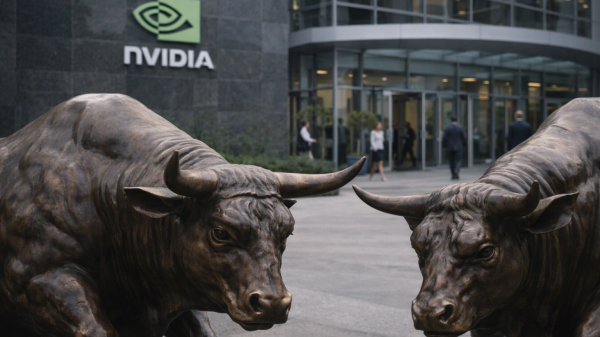







US stocks edged lower on Wednesday as weakness in major technology names—particularly Microsoft—pulled the broader market into the red and traders weighed the implications of a softening economic backdrop.
The S&P 500 fell 0.2%, the Nasdaq Composite declined 0.3% and the Dow Jones Industrial Average dipped 18 points.
Microsoft shares slid after The Information reported that the company was cutting software sales quotas tied to artificial intelligence.
The stock was last down about 2% and sparked declines across other AI-linked names.
Nvidia and Broadcom moved lower in early trading, while Palantir Technologies also came under pressure.
Despite the subdued tone across the tech sector, Marvell Technology shares surged more than 6% after Wall Street reacted positively to the company’s data centre growth projections.
Retailer American Eagle Outfitters also delivered an upbeat surprise, jumping more than 15% after lifting its full-year guidance and reporting a strong start to the holiday shopping season.
The moves offered some support to a market that has struggled to regain momentum after a choppy November characterized by profit-taking and valuation concerns around high-flying AI names.
Bitcoin continued to recover from Monday’s steep drop, trading above $92,000 on Wednesday and contributing to broader risk-on sentiment in digital assets.
Soft ADP Payrolls data tempers losses
Losses were partly offset by economic data that traders interpreted as strengthening the case for a Federal Reserve rate cut next week.
Payrolls processor ADP reported that private sector employment unexpectedly fell by 32,000 in November.
Economists surveyed by Dow Jones had been looking for a gain of 40,000.
The weaker-than-expected report appeared to bolster expectations that the Fed may deliver another quarter-point cut at its Dec. 10 meeting.
Markets are pricing an around 89% chance of a cut, up sharply from mid-November, according to the CME FedWatch tool.
While large companies with 50 or more employees added 90,000 jobs, small businesses—those with fewer than 50 workers—cut a net 120,000 positions.
Firms with 20 to 49 workers accounted for a loss of 74,000, marking the sharpest decline since March 2023.
Job growth was strongest in education and health services, which added 33,000 positions, followed by leisure and hospitality with 13,000.
Still, broad-based industry weakness weighed on the headline figure.
Professional and business services shed 26,000 jobs, while information services lost 20,000. Manufacturing fell by 18,000, and financial activities and construction each lost 9,000 workers.
Wage growth also softened. Workers who stayed in their jobs saw a 4.4% year-over-year pay increase, down from October’s 4.5%.
“Hiring has been choppy of late as employers weather cautious consumers and an uncertain macroeconomic environment,” said ADP chief economist Nela Richardson.
She noted that November’s decline was driven heavily by small-business retrenchment.
The ADP reading will be the last private payrolls snapshot before the Fed convenes on Dec. 9–10.
Futures markets are betting heavily that policymakers will move ahead with another cut despite lingering reservations among some officials.
With December historically a strong month for equities, investors continue to assess whether a year-end rally is still in play or whether the cooling labour market signals more turbulence ahead.
The post US stocks slip at open: Nasdaq down 0.3%, S&P dips 0.2% appeared first on Invezz