
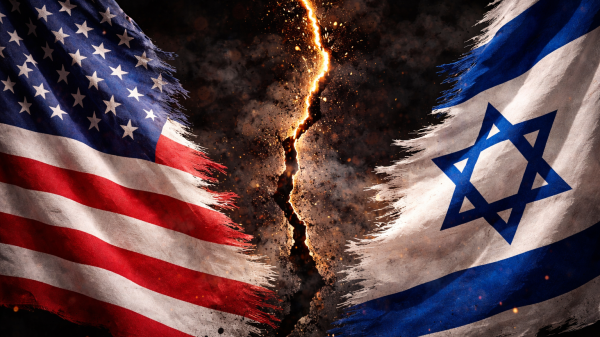










Could US President Donald Trump’s renewed push to acquire Greenland — by purchase or force — mark a breaking point for NATO’s 77-year-old alliance?
A growing number of experts and political figures believe it could.
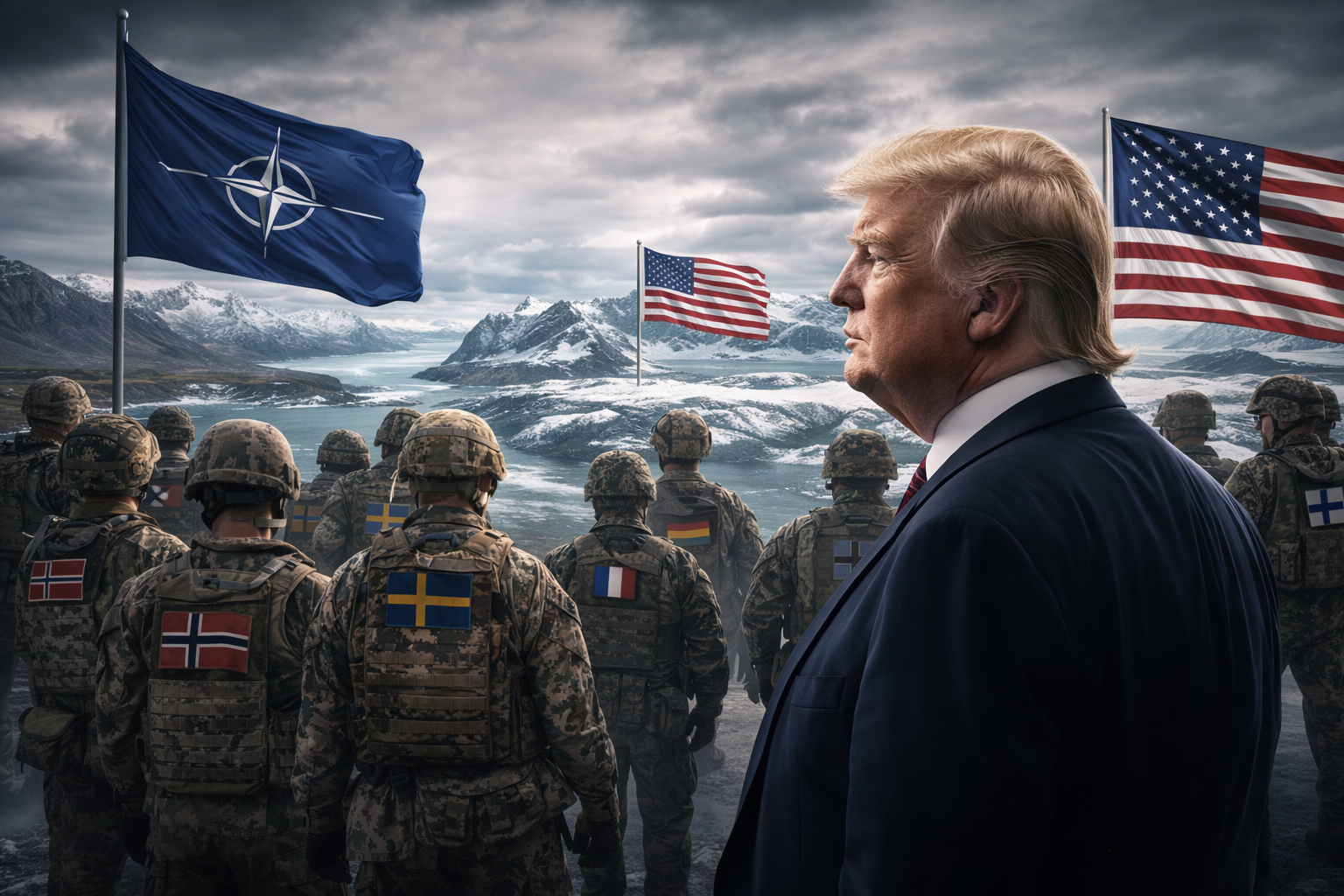
Trump said on Saturday that NATO countries that have deployed small contingents of troops to Greenland would face a 10% tariff on all goods exported to the United States starting February 1.
The countries affected include Denmark, Norway, Sweden, France, Germany, the United Kingdom, the Netherlands, and Finland.
According to the president, those tariffs would rise to 25% from June 1 and remain in place until the US is able to purchase Greenland.
The new volley of tariffs has enraged the European Union, which is already weighing retaliatory tariffs on American goods.
“Tariff threats undermine transatlantic relations and risk a dangerous downward spiral,” the leaders of Denmark, Norway, Sweden, France, Germany, the UK, the Netherlands, and Finland have said in a joint statement.
“We are committed to upholding our sovereignty.
Earlier this month, Danish Prime Minister Mette Frederiksen warned that a US attack on a NATO ally could spell the end of the alliance itself.
“If the United States decides to militarily attack another NATO country, then everything would stop — that includes NATO and therefore post-Second World War security,” Frederiksen told Danish broadcaster TV2.
Trump’s decision to escalate pressure through tariffs has prompted renewed warnings from analysts that NATO’s credibility is being undermined even without military action.
Article 5 credibility questioned
Steven N. Durlauf, professor at the University of Chicago’s Harris School of Public Policy, said the threat alone could represent a fundamental rupture.
“Regardless of whether the threat works, it represents the de facto end of NATO as an alliance,” Durlauf wrote on X.
This action of extortion against NATO allies crosses the Rubicon in terms of US relations with Europe. The threat destabilizes NATO and will cause long run damage to the United States economy.
1/ Regardless of whether the threat works, it represents the de facto end of NATO as
626
Reply
Copy link
“NATO functions because of credible commitments between allies. This action demonstrates that Article 5 is a dead letter.”
Durlauf said the action will “accelerate antipathy towards the United States throughout the world”.
What future ally can trust the US in light of this action? Even if the Democrats win in 2028, the possibility of a future Trump-like president means a permanent loss of trust.
Republican concern over military escalation
The alarm has not been confined to Trump’s critics.
Republican Representative Michael McCaul warned that any military intervention to obtain Greenland would place the US in direct conflict with its allies.
“The fact is, the president has full military access to Greenland to protect us from any threat,” McCaul said in an interview with ABC News.
So if he wants to purchase Greenland, that’s one thing. But for him to militarily invade would turn Article 5 of NATO on its very head and, in essence, declare war on NATO itself. It would end up abolishing NATO as we know it.
NATO leadership seeks to contain fallout
NATO Secretary General Mark Rutte said on Sunday that he had spoken with Trump about “the security situation in Greenland and the Arctic” and that discussions would continue.
He said he expected to meet Trump later this week in Davos.
Earlier this month, Rutte sought to downplay fears of an existential crisis, telling reporters during a visit to Zagreb that NATO was “not at all” in danger and was “working in the right direction.”
However, former US ambassador to NATO Julianne Smith said the situation posed an unprecedented challenge.
Smith said that there have been a few incidents in the past, particularly between Greece and Turkey, where they have been at odds.
But this chapter, where the most powerful and influential member of the NATO alliance is talking about invading or taking or infringing on another country’s sovereign territory, does present a unique one-of-a-kind dilemma for the alliance.
Can Trump withdraw the US from NATO?
Trump has repeatedly argued that anything short of US control of Greenland is “unacceptable” and has suggested that NATO should support Washington’s efforts.
He has also refused to rule out withdrawing from the alliance.
Legally, that path is complicated but not impossible.
The US National Defense Authorization Act of 2024 sought to block unilateral withdrawal by requiring either a two-thirds Senate majority or an act of Congress.
But legal scholars say those constraints may be tested.
“Those legal constraints remain far from solid,” said Ilaria Di Gioia, senior lecturer in American law at Birmingham City University, in comments to TIME magazine.
She said Trump could attempt to bypass Congress by invoking presidential authority over foreign policy or national defence.
It is unclear whether any party would have legal standing to challenge such a move in court. The most plausible plaintiff would be Congress itself, but with the Republicans in control of the Senate, political support for such a lawsuit is far from assured. The result would be a constitutional confrontation between the Executive [branch] and Congress, with the courts as the likely referee.
Curtis Bradley, a law professor at the University of Chicago, pointed to historical precedent, including President Jimmy Carter’s withdrawal from a defence treaty with Taiwan in 1978.
Still, he said the current legal framework would make a NATO exit contentious and politically risky.
Is there a possibility for NATO’s survival?
According to Marko Milanović, Professor of Public International Law at the University of Reading School of Law and the Raoul Wallenberg Visiting Chair in Human Rights and Humanitarian Law at the University of Lund, while an annexation would most likely be an end to NATO, there are two possibilities for its “nominal survival”.
“The first would be for it somehow to continue limping on until there is a change of administration in Washington, which would then repudiate and provide reparation for Trump’s imperialist policies,” he says, however, adding that the breach of trust would have been so drastic that somehow that restoration could ever work.
He noted it also assumes the next US administration would be saner than Trump’s.
The second would be for NATO to transform into the Warsaw Pact and for the (remaining) states in it to become nothing more than American servants. But NATO as we know it today would be dead.
The post Does Trump’s Greenland gambit mean an end of NATO? Here’s what experts say appeared first on Invezz