





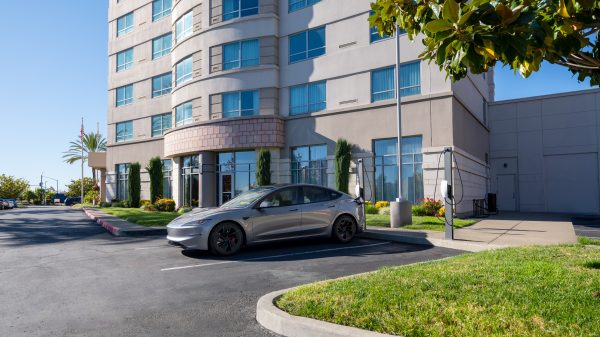




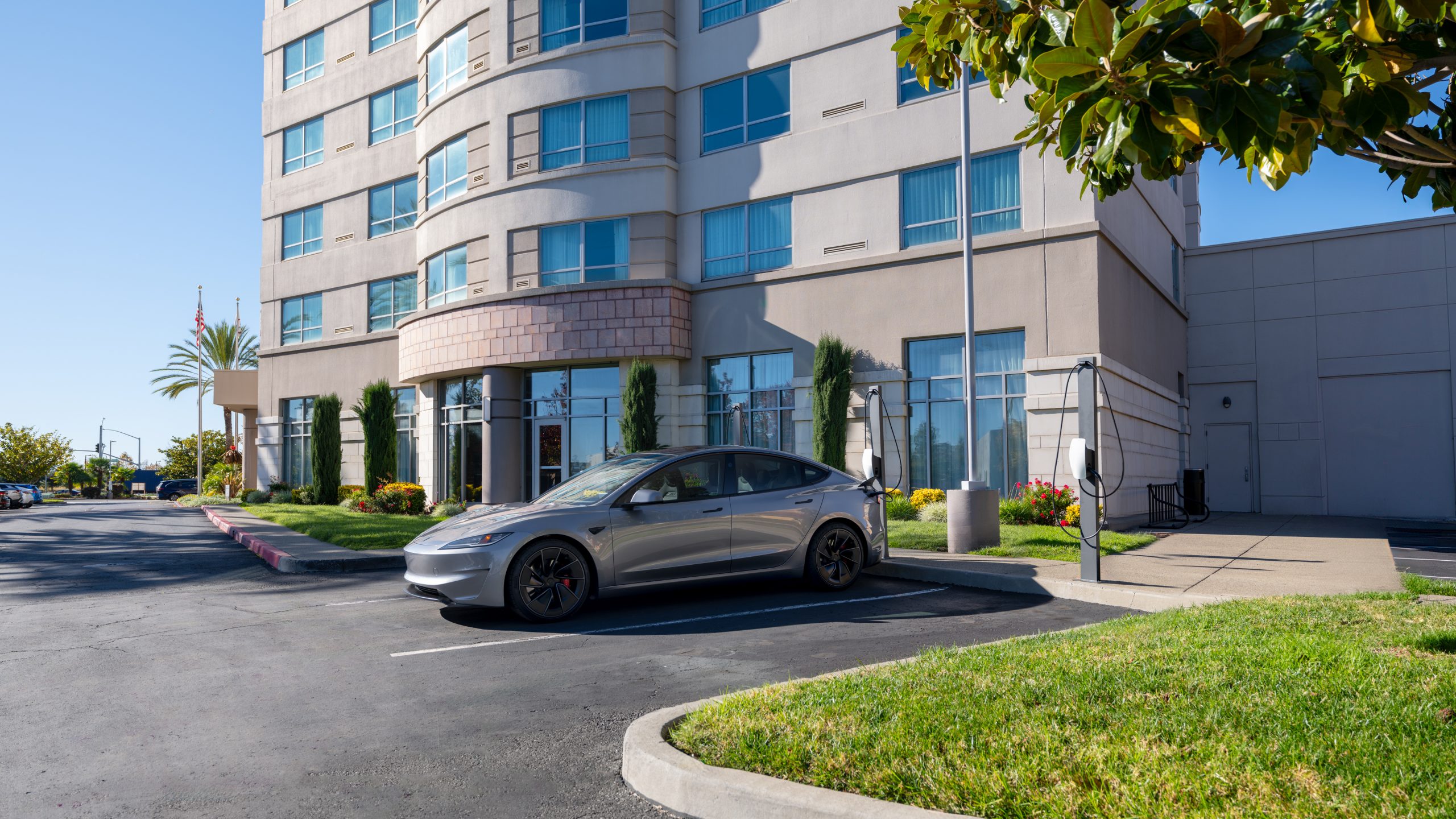
Shares of Tesla fell in early Wednesday trading, slipping to $398.75, as broader US markets came under pressure following a stronger-than-expected inflation reading.
The Dow Jones Industrial Average dropped 351 points, or 0.8%, while the S&P 500 declined 0.5%.
The Nasdaq Composite also fell 0.5%.
The move came after the latest producer price index (PPI) data showed wholesale prices rising 0.7% in February, significantly above the 0.3% increase expected by economists.
The hotter reading reinforced concerns that inflation remains persistent, even before factoring in the impact of the Iran conflict and rising oil prices.
Inflation and Fed outlook in focus
The elevated PPI print has added to fears of stagflation — a mix of slowing growth and rising prices — particularly as geopolitical tensions continue to push energy costs higher.
Investors are now closely watching the Federal Reserve for its next policy decision, with expectations for rate cuts becoming increasingly uncertain in light of stubborn inflation.
The macro backdrop has created a challenging environment for growth-oriented stocks, including Tesla, which tend to be sensitive to interest rate expectations.
Robotaxi expansion seen as key catalyst
Despite near-term pressure on the stock, analysts remain focused on Tesla’s long-term growth drivers, particularly in autonomous driving.
Morgan Stanley reiterated an Equalweight rating on Tesla with a $415 price target, emphasising that the company’s progress in scaling an unsupervised robotaxi fleet is the most important catalyst for the stock in 2026.
Analyst Andrew Percoco wrote that Tesla’s ability to expand its robotaxi operations will play a central role in shaping investor sentiment this year.
Following meetings at a recent TMT conference and a tour of Gigafactory Texas, Morgan Stanley said it was “incrementally more positive on the outlook for robotaxi and Cybercab production,” with production still on track to begin in April.
A key part of Morgan Stanley’s thesis is the feedback loop between robotaxi operations and Tesla’s Full Self-Driving (FSD) technology.
The firm noted that each additional mile driven by robotaxis contributes to improving the autonomy model, which in turn supports higher FSD adoption rates among consumers.
This dynamic could help re-accelerate vehicle demand and improve cash flow generation over time.
Morgan Stanley described this as a loop, where increased real-world data enhances software performance, reinforcing Tesla’s competitive position in autonomous driving.
New AI and robotics initiatives
Tesla is also advancing its broader artificial intelligence ambitions.
The company is set to launch its “Terafab” chip factory on March 21 at its Gigafactory Texas facility in Austin, Texas, marking a step toward deeper vertical integration in AI hardware.
In addition, Morgan Stanley expects Tesla to unveil its Optimus Gen 3 humanoid robot in the coming months, with production targeted for the second half of 2026.
Energy storage remains another area of growth, although the firm cautioned that margins in this segment could face pressure in the near term due to competition and tariff timing.
The post Why Tesla stock is down in the red today appeared first on Invezz