













Britain’s inflation rate held steady in February, showing that prices were stable before a sharp escalation in global energy costs raised concerns over a renewed surge in prices.
Official data showed the consumer prices index remained at 3% year-on-year, unchanged from January and broadly in line with economists’ expectations.
However, the figure remains well above the government’s 2% target, underscoring persistent price pressures in the economy.
The relatively stable reading reflects a balance between rising costs in some categories and easing pressures in others, but economists warn the outlook has shifted significantly in recent weeks.
Energy shock reshapes inflation trajectory
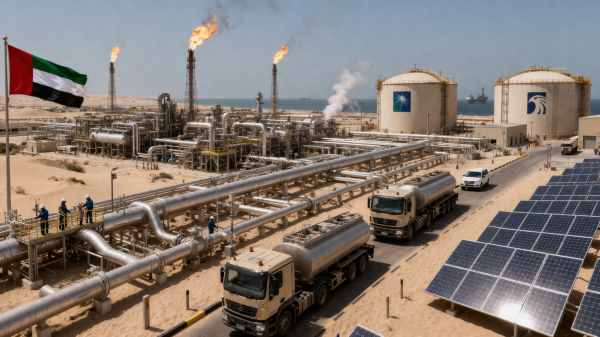
The inflation landscape has been altered by the escalation of the Middle East conflict, which has disrupted global energy supplies and driven up oil and gas prices.
The effective closure of the Strait of Hormuz, a key artery for global energy shipments, has triggered a sharp increase in fuel costs, with petrol prices already rising notably since the onset of the conflict.
Data for February did not capture the full impact of these developments.
Grant Fitzner, chief economist at the Office for National Statistics, said falling petrol prices during the data collection period helped offset increases elsewhere.
He noted that clothing prices were the largest upward contributor to inflation in February, rising this year after falling in the same month last year.
However, with energy prices climbing rapidly in March, analysts expect upward pressure on inflation to intensify in the coming months.
Food prices offer temporary relief
Food inflation provided some respite, easing to 3.3% in February from 3.6% the previous month, marking its lowest level since March 2025.
The decline was driven by lower prices for items such as olive oil, flour, and pizza, alongside a modest drop in alcohol and tobacco prices.
Despite the moderation, industry groups have warned that the improvement may prove short-lived.
Karen Betts, chief executive of the Food and Drink Federation, said the current trend could represent a temporary lull before renewed increases.
She cautioned that rising costs for fertilisers, energy, and transport linked to the Middle East disruption are likely to feed through into food prices, putting additional pressure on households.
Core inflation signals broader risks
Underlying inflation pressures showed signs of firming, with core inflation, which excludes volatile components such as food and energy, rising to 3.2% in February from 3.1% a month earlier.
The increase may reinforce concerns among policymakers that price pressures could become more entrenched across the economy, beyond sectors directly affected by energy costs.
This dynamic complicates the policy outlook for the Bank of England, which had previously expected inflation to fall back to target in the second quarter, paving the way for interest rate cuts.
Policy outlook shifts toward tightening
The central bank has already signalled caution, holding interest rates steady at its latest meeting as uncertainty around the inflation outlook intensified.
Financial markets have since revised their expectations, with investors now increasingly pricing in the possibility of rate hikes rather than cuts later this year.
The shift reflects concerns that sustained energy-driven inflation could limit the Bank’s ability to ease monetary policy, even as economic growth remains subdued.
Government response and fiscal challenges
Chancellor Rachel Reeves said the government remains committed to supporting households while maintaining fiscal discipline in an uncertain global environment.
In an uncertain world, we have the right economic plan, taking a responsive and responsible approach to supporting working people in the national interest.
“We’re taking £150 off energy bills [from measures in November’s budget] and providing targeted support for those facing higher heating oil costs. We’re also acting to protect people from unfair price rises if they occur, bring down food prices at the till, and cut red tape to boost long-term energy security — building a stronger, more secure economy,” she said.
She added that the government would review planned fuel duty changes later this year, but stopped short of confirming any delay.
As energy markets remain volatile and geopolitical tensions persist, the trajectory of inflation in the UK is likely to depend heavily on developments in global commodity prices.
For policymakers and households alike, the February data may represent a temporary pause before a more challenging phase for inflation and the broader economy.
The post UK inflation steady at 3% in February as energy shock clouds outlook appeared first on Invezz